
In 2025, Companies Announced $31.2 Billion in New Clean Energy Manufacturing Investment and More Than 35,800 Anticipated Manufacturing Jobs
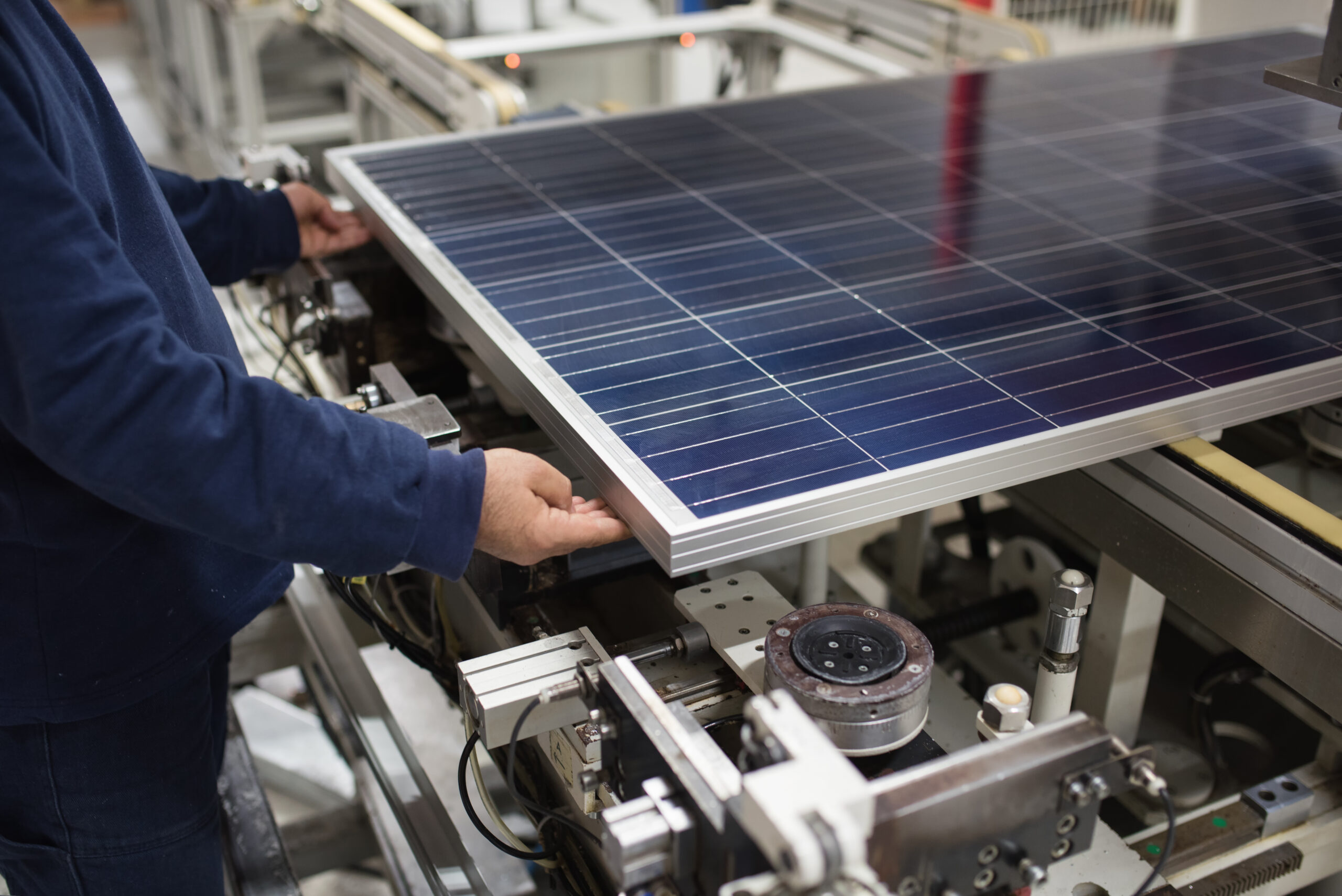
In 2025, clean energy manufacturing projects announced nationwide totaled $31.2 billion, compared to $41.7 billion in 2024. This reflects a decrease in newly announced investments from the previous year. Additionally, in 2025, the industry saw $29.7 billion worth of projects canceled.
In 2025, cancellations were highest for battery and EV manufacturing, as many automakers shifted EV manufacturing plans toward gasoline, hybrid, and extended range models, driving higher cancellation rates in EV and EV battery manufacturing.
Despite these developments, approximately 74% of active investments (excluding cancellations) announced through the end of 2025 are operational or under construction, underscoring continued momentum for clean energy manufacturing projects.
In 2025, the United States added a record 48 GW of new clean power capacity—matching 2024 levels and nearly doubling 2022. However, a wave of large clean power generation project cancellations especially for battery, solar PV, and onshore wind, slowed growth this year.
Below, we break down the largest clean manufacturing and power generation developments in 2025, highlight leading states for investments and jobs, and show where rescinded investments and closures were most severe.
For more information or assistance, please contact [email protected].
2025 Clean Manufacturing Announcements
In total in 2025 there was:
-
$31.2 billion in new investments, representing 35,800 jobs and
-
$29.7 billion in canceled and retracted investments, representing 39,190 jobs.
States leading in 2025
Announced Investments:
Ohio led 2025 with the highest total of newly announced investments, at $5.4 billion, followed by Kentucky ($3.6 billion) and Washington ($3.1 billion).
Announced Jobs:
Texas had the most newly announced manufacturing jobs in 2025, totaling 8,010, with South Carolina (3,830), and North Carolina (3,000) following.
States falling behind in 2025
Announced Cancellations:
Illinois led 2025 with the highest total investments cancelled, at $4.8 billion, followed by Georgia ($3.6 billion) and Michigan ($3.4 billion).
Announced Job Retractions and Losses:
Canceled projects resulted in significant job losses, led by Michigan with an estimated 7,400 anticipated or permanent positions lost, followed by Illinois (4,330 jobs) and Ohio (3,900 jobs).
Where Clean Energy Manufacturing Investments Grew and Where They Retreated in 2025
Notable Facility Investments and Expansions in 2025:
Washington: In early January, Washington Energy announced plans to build its Nuclear Fuel Facility. The company reportedly invested $3 billion into the facility which is expected to bring 1,000 jobs to the area when operational. Expansion.
Texas: In March, T1 Energy announced it was developing an $850 million, 5-gigawatt solar cell manufacturing facility, “G2 Austin,” in Milam County, Texas, aimed at becoming one of the largest in the U.S. Located on over 100 acres at the Advanced Manufacturing Logistix Campus near Rockdale; the project is expected to create 1,800 jobs, with production starting in late 2026. Announcement.
Ohio: In May, Canadian-based company, Graphite One invested over $3.4 billion to build a graphite processing plant in the Weathersfield Township, Ohio, which is expected to bring in more than 150 jobs to Trumbull County by the time it is fully operational in 2031. Announcement.
Georgia: In September, Hyundai Motor Group announced plans to expand its Metaplant EV assembly facility in Georgia, committing an additional $2.7 billion to the project. The three‑year investment will create 3,000 direct and indirect jobs and support Hyundai’s goal of producing more than 80% of the vehicles it sells in the U.S. domestically by 2030. Expansion.
Notable Facility and Investment Cancellations in 2025
Illinois: In March, Stellantis announced it was going to reopen its shuttered Belvidere Assembly Plant in Illinois to produce a new mid‑size truck by 2027, but will no longer move forward with plans for a $1.5 billion EV assembly plant and $3.2 billion EV battery plant and parts hub that together were expected to provide 2,800 jobs in northern Illinois. Cancellation.
Georgia: In early February, Freyr officially announced that it will not build its proposed $2.6 billion battery factory in Coweta County, Georgia. This marked “a major shift from the company’s original plans to build the Giga America facility, which was expected to create 723 jobs over seven years.” Cancellation.
Tennessee: In December, Ford announced that it was abandoning plans to invest $2.8 billion in electric truck production at its Stanton facility, pivoting instead to all‑new gas‑powered truck models. Reflecting the pivot amid a broader EV restructuring, the site will also be renamed from the Tennessee Electric Vehicle Center to the Tennessee Truck Plant. Cancellation.
Clean Power Generation Through 2025
The Clean Economy Tracker also surfaces data on the deployment and planned capacity of key clean power generation facilities. The following summarizes key developments in the data, identifying the leading technologies and states, by clean power capacity, as well as technologies that experienced setbacks. Note that clean power capacity here refers to planned, under construction, and operational generation sites.
Technology Breakdown: Solar PV leads with 270 GW of clean power capacity (accounting for 34% of total clean power capacity), followed by onshore wind with 181 GW (23%) and batteries with 109 GW (14%).
Leading States: Texas outpaces all other states in clean power capacity through 2025 with 167 GW, followed by California at 83 GW and Arizona at 36 GW.
Total clean power capacity announced through 2025 totals 794 GW, with developers expected to invest an estimated $976 billion through 2031 in these projects. Solar PV (120 GW) and battery projects (66 GW) dominate the pipeline, accounting for 86% of clean power capacity planned and under construction. For comparison, fossil and other energy sources represented just 45 GW of capacity planned or under construction.
While much progress was made in capacity expansions for solar, wind, and battery projects, 2025 also marked a turning point as 13.5 GW of projects were canceled nationwide amid growing federal policy shifts.
About the data
The Clean Economy Tracker (CET) tracks private-led investments and jobs in clean energy manufacturing, deployment as well as related public statements by lawmakers serving in the U.S. Congress. Clean energy manufacturing and deployment covers production facilities for batteries, critical mineral production and processing, electric vehicles, heat pumps, hydrogen electrolyzers, transmission and grid materials, and zero-emissions electricity generation (including solar, wind and nuclear). The tool was developed by Atlas Public Policy and Utah State University and is updated at least weekly.
Note the data cover manufacturing only and are through September 31, 2025. The jobs reflect direct, permanent manufacturing jobs and do not include indirect or construction jobs. Jobs canceled refers to clean energy jobs canceled. Where production is moved to another facility, production at the original facility is marked as canceled and investment and jobs are marked as canceled. If and when investment and jobs numbers at the new facility are announced, they will be added to the database.
Get in touch: [email protected]
About Author
